
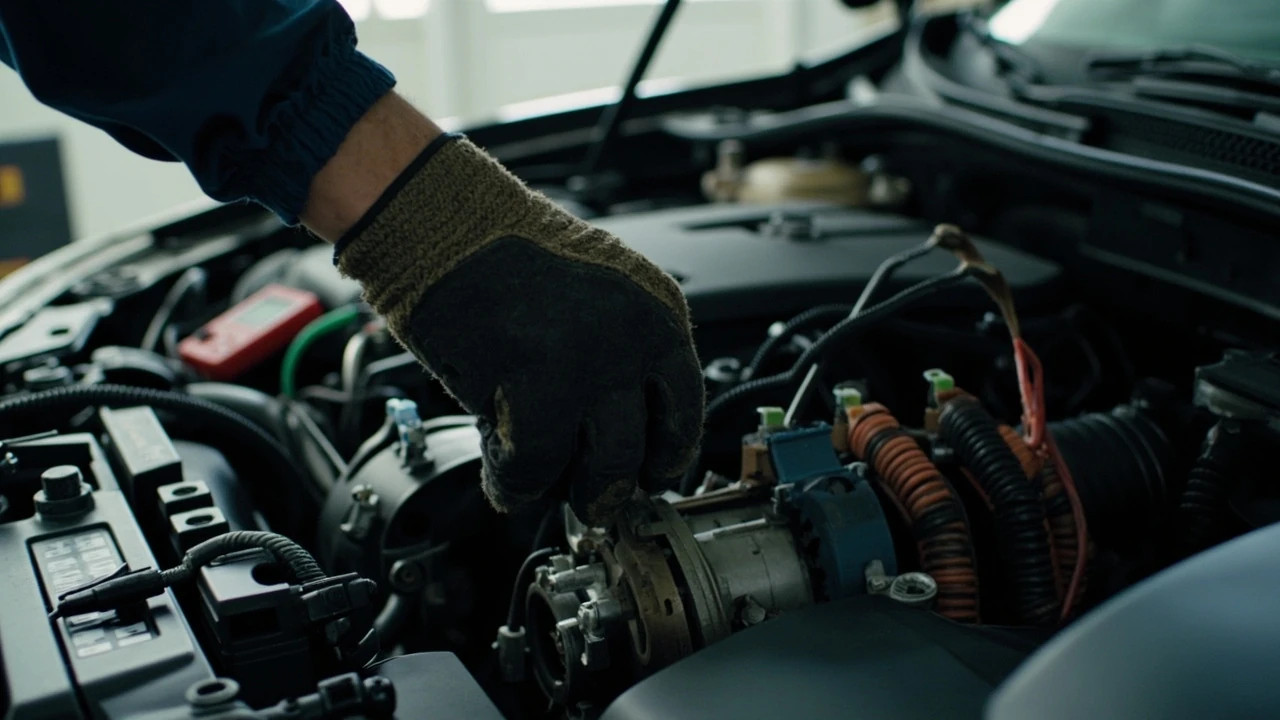
Bad ignition coil symptoms: what to look for and how to confirm them
A sudden stumble while accelerating, an unsteady idle, or an engine that occasionally dies at a stop can leave a driver unsure whether the problem is in the ignition coil, a spark plug, a fuel system, or a much more expensive internal engine issue. The most recognizable bad ignition coil symptoms usually involve a change in how the engine runs, especially when one cylinder stops producing a reliable spark. Recognizing the pattern, ruling out look-alike faults, and performing a few careful checks can prevent both unnecessary repairs and risky driving.
An ignition coil transforms the vehicle’s battery voltage into the much higher voltage needed to ignite the air-fuel mixture in a gasoline engine. Modern engines commonly use one coil for each spark plug, while some older vehicles use a shared coil, a coil pack, or a distributor. Because the exact arrangement varies by make, model, engine, and year, a symptom that points strongly toward an ignition problem on one vehicle may appear differently on another.
The safest approach is to observe, document, and test rather than replace parts at random. If the engine is flashing its check-engine light, running unevenly, losing power, or producing a burning smell, stop prolonged driving and arrange a diagnosis. Here is how to separate likely ignition-coil trouble from other common causes and decide what action makes sense next.
How ignition-coil failure affects the engine
An ignition coil stores electrical energy and releases it as a high-voltage pulse. When that pulse reaches the correct spark plug at the correct time, the air-fuel mixture burns in the cylinder. If the coil cannot store or deliver enough energy, the spark may become weak, intermittent, or absent. The affected cylinder may then burn incompletely, causing a misfire.
The basic design remains similar across common coil-on-plug, coil-pack, and waste-spark arrangements. To understand how an ignition coil works, it helps to think of the coil as a transformer. The engine’s electrical system energizes the primary winding, creating a magnetic field. When the primary circuit is switched off, that changing field induces high voltage in the secondary winding. That voltage travels to the spark plug and initiates combustion.
Several forms of coil damage can interrupt that process:
- Internal insulation breakdown: Current may leak inside the coil, changing its electrical behavior or causing a failure when the component becomes hot.
- Open or weakened connections: Corrosion, a loose connector, damaged wiring, or poor contact with the spark plug may interrupt the signal.
- Thermal damage: A coil that works when cold may fail after the engine warms up because heat affects the damaged insulation or connection.
- Manufacturing or physical damage: Cracks, impact damage, moisture intrusion, heat exposure, or aging can affect the coil or its terminals.
- Secondary circuit problems: A damaged plug wire, plug boot, or spark plug may create symptoms similar to a defective coil, although it is not a coil failure itself.
Some modern ignition systems also use electronic control to determine when each coil fires. If the engine control module detects a problem with the coil circuit, the commanded timing, the coil’s ability to produce a spark, and the plug’s condition all need to be considered. A scan tool can reveal a misfire, but it does not automatically identify which component caused it.
Common engine and driving symptoms linked to a failing coil
The strongest bad ignition coil symptoms usually follow a repeatable pattern. A single failed coil often creates a recognizable “missing cylinder” sensation, while a shared coil or multiple damaged coils can affect several cylinders and make the engine run more consistently rough.
| Symptom | What the driver may notice | Why it may point to the ignition | What to watch |
|---|---|---|---|
| Rough or uneven idle | The engine shakes, surges, sounds uneven, or drops to a low idle. | One or more cylinders may not be firing consistently. | Also consider vacuum leaks, fuel mixture, or a failing idle-control component. |
| Engine misfire | A sudden jerk or hiccup occurs under load. | A cylinder may lose its spark during acceleration or higher engine load. | A flashing check-engine light calls for prompt diagnosis. |
| Stalling | The engine stalls at idle, in traffic, or while slowing to a stop. | The failed cylinder may not fire reliably at the speed used during a restart. | Fuel delivery and sensor faults can produce the same result. |
| Hard starting | The engine cranks longer than usual or may start and immediately stumble. | Weak ignition energy can make starting slower and less consistent. | Weak battery current, fouled plugs, and compression issues also slow starting. |
| Loss of power | The vehicle feels sluggish or no longer accelerates as expected. | Repeated incomplete combustion reduces engine output. | Compare with fuel, exhaust, tire, and braking issues before blaming the coil. |
| Warm-weather failure | The problem appears after the engine has been running for several minutes. | Heat can worsen internal coil insulation or a marginal connection. | Test both cold and hot if the fault is intermittent. |
Pay attention to the conditions surrounding the fault. A stumble during hard acceleration, an idle shake, and a stall at a traffic light can all involve the same failed cylinder, but the operating condition changes what else is happening in the engine. This is why recording the speed, engine temperature, load, and frequency of the problem is valuable.
Other clues can strengthen or weaken the diagnosis:
- Check-engine light: An illuminated light, especially a flashing one, indicates that the powertrain control module has detected an emissions-related fault. A flashing light generally warrants stopping the drive promptly.
- Unusual exhaust: A rough, loud exhaust note may accompany repeated misfires. An acrid or unusually strong unburned-fuel smell can develop if combustion is incomplete. That smell warrants shutting off the engine if it becomes strong or is accompanied by smoke.
- Reduced fuel economy: The engine control system may compensate for a cylinder that is not burning correctly, although this is not a reliable stand-alone diagnostic clue.
- Transmission symptoms: Some vehicles shift harshly when the engine is running unevenly. The transmission may be reacting to torque variation rather than having a separate transmission fault.
- Failure under load: A marginal coil often manages to run at idle but cannot keep up when more spark energy is required.
The classic form of bad ignition coil symptoms is therefore not simply “the engine is running badly.” It is a cylinder-related disturbance that can repeat under similar conditions, changes when the engine warms up, or produces a specific diagnostic misfire code.
Look-alike problems that can imitate a bad ignition coil
Before replacing a coil, a technician needs to determine whether the coil is actually the failed part. Several faults create a missing spark or an incomplete-combustion condition with similar outward effects. Replacing the coil without checking the plug, wiring, connectors, or fuel system may leave the underlying issue in place.
| Possible cause | Similar symptom | Useful distinction | Best next check |
|---|---|---|---|
| Fouled or damaged spark plug | Misfire, rough idle, hard start, loss of power | The plug may be worn, cracked, wet, oil-fouled, or incorrectly gapped. | Inspect and test the plug; verify the correct heat range and gap for the engine. |
| Damaged plug wire or boot | Misfire under load or during acceleration | Older systems route spark through wires; a crack can create an open circuit. | Inspect the wire, boot, and terminal for damage and test the secondary circuit. |
| Weak battery or alternator fault | Slow crank, dim lights, stalling | Low supply voltage can imitate a weak ignition system. | Measure battery condition and charging-system output. |
| Fuel-injector problem | Rough idle, misfire, power loss | An injector may deliver too little or too much fuel. | Check for injector codes and perform a fuel-system balance or flow test. |
| Vacuum leak | Unsteady idle and hesitation | Unmetered air can create a lean mixture and poor running. | Inspect hoses and use controlled smoke or a suitable diagnostic method. |
| Low engine compression | Hard start, weak power, persistent misfire | A damaged valve, piston, gasket, or other internal part can reduce compression. | Perform a compression test and inspect the relevant engine systems. |
| Air-fuel mixture sensor issue | Stalling, hesitation, power loss | The engine may command the wrong fuel mixture even when ignition is normal. | Compare sensor data with live oxygen-sensor readings. |
| Catalytic converter damage | Power loss with check-engine light | Restricted exhaust flow can make the engine feel unresponsive. | Review stored codes and perform an exhaust-system diagnosis. |
Internal engine damage deserves special attention. A severe, long-running misfire can overheat the catalytic converter and, in some cases, damage valves or other components. If a coil-related fault has remained active for a long time, replacing the coil alone may not restore full performance. A technician may need to check compression, catalyst condition, and the condition of the exhaust system before declaring the repair complete.
Start by separating three questions: Is the engine misfiring, is the misfire isolated to a cylinder, and is the spark reaching that cylinder correctly? A scan tool, a spark tester, and careful inspection can answer those questions much more reliably than replacing parts based on the sound alone.
Safe at-home checks before scheduling a repair
Several preliminary checks can help narrow the cause without opening the ignition system. They cannot confirm every diagnosis, and some steps require the engine to be off, cool, and disconnected from the battery. Use the vehicle owner’s manual for access instructions, safe testing procedures, and component locations.
- Record the failure pattern. Note when the misfire occurs: cold start, warm idle, acceleration, deceleration, or steady speed. Record the engine temperature, approximate speed, frequency, and whether the check-engine light flashes.
- Inspect visible ignition components. With the engine off, look for cracked plug boots, damaged wiring, corrosion, oil or coolant contamination, missing coil fasteners, or components that do not sit correctly.
- Check for service codes. A scan tool may show a pending or stored misfire code such as P0300 through P0308, depending on the vehicle. Code numbers indicate a detected cylinder or general misfire, not the underlying part. Clear codes only if you understand that doing so erases useful history and can make an intermittent problem harder to reproduce.
- Compare the cylinders. On an engine with individual coils, compare how the engine responds when each cylinder is disabled during an idle test, if the vehicle’s diagnostic procedure supports that method. A cylinder that makes no difference may need further investigation, but this result can also be influenced by other faults.
- Use a proper ignition tester. A spark tester can show whether a coil produces a spark under controlled conditions. A plug-in tester that lights for every cylinder does not confirm that the plug is firing under load or that the coil remains healthy when hot.
- Check power and ground. Confirm that the battery and charging system are operating correctly. A control module cannot command a coil normally if supply voltage is inadequate.
- Inspect the spark plugs. Look for wear, cracks, carbon deposits, oil, coolant, or a gap that does not match the manufacturer’s specification. Never assume that a plug with visible damage is the only problem.
For an owner who does not have diagnostic equipment, the most useful checks are the written symptom log, visual inspection, and a scan performed by a repair shop. For additional context, Randomly swapping coils can create misleading results if the replacement coil was also defective or if the real fault is a plug, connector, or wiring problem. On some vehicles, moving a known-good coil to another cylinder is a controlled comparison, but connector pin damage, oil in the boot, and physical differences between cylinders can make the result less reliable than it appears.
Safety note: Ignition systems can produce dangerous high voltage. Keep fingers, tools, and loose clothing away from the coil and spark-plug area while the engine is running. Do not probe the secondary circuit with improvised equipment. If a test requires removing a coil or plug, switch off the engine, follow the manual’s procedures, and disconnect the battery when directed.
A multimeter can test selected resistance and continuity values on some coils, but the acceptable range depends on the manufacturer and test method. A reading that appears plausible on the bench does not prove that a coil will operate correctly on the engine. Live ignition testing, where appropriate, is generally more conclusive.
How a scan tool and ignition tester narrow down the fault
A diagnostic scan is most valuable when the symptom can be reproduced. The technician can watch misfire counts, ignition events, injector commands, fuel trims, oxygen-sensor activity, and related data while the engine runs. The information may show whether the fault follows a specific cylinder and whether it appears under load or only after warming up.
Useful diagnostic records include:
- Current and pending powertrain fault codes.
- Per-cylinder misfire counts and the conditions recorded with each event.
- Engine speed, load, coolant temperature, and intake-air temperature at the time of the fault.
- Short-term and long-term fuel-trim readings, which may support a fuel or air-supply concern but do not identify a single component by themselves.
- Ignition-coil primary-circuit waveforms when the vehicle has accessible test points and the manufacturer provides suitable diagnostic procedures.
- Spark-plug and coil comparison results after the fault has been reproduced under the same conditions.
The order of operations matters. A technician should capture data before clearing codes or replacing parts. They should also consider whether the misfire is active during the test. An old misfire code can remain after the original problem has been corrected, while a code may not be stored at all if the failure is too brief or occurs under conditions the vehicle was not driven in.
Waveform readings can reveal a weak or irregular primary signal, but interpretation requires the correct procedure for that ignition system. Likewise, a good spark at the plug under a static test may coexist with a coil that fails when hot. A complete diagnosis may therefore combine code information, visual inspection, cylinder comparison, loaded testing, and electrical measurements rather than relying on one instrument reading.
After the repair, the technician should verify more than the absence of a code. The engine should start normally, maintain a stable idle, accelerate without hesitation, and complete the road test or equivalent loaded test without new misfire counts. If the original symptom was heat-related, the final verification may need to include a warm operating cycle.
What ignition-coil replacement involves
On a coil-on-plug engine, replacing a failed ignition coil is often a focused repair. The engine may need to be cooled, the coil connector disconnected, fasteners removed, and the old coil lifted from the spark plug. The new coil and its boot must be seated correctly, and the electrical connector must be locked in place.
The process varies by vehicle. Some engines place the coil above the plug, while others place it in a wiring harness or beneath a cover. Access can be tight, and moving a coil may require removing intake components, the throttle body, or other hardware. The plug may also be inspected during access, but it should not be replaced automatically unless inspection, service history, wear, or the manufacturer’s procedure calls for it.
| Repair consideration | What affects the decision | Why it matters |
|---|---|---|
| Replace one coil or a set | Whether one cylinder is clearly affected, the age and condition of the remaining coils, and manufacturer guidance | Matched replacement can be sensible when age-related failures are likely, but it is not automatically necessary in every case. |
| Replace the spark plug | Plug condition, type, gap, and whether it was previously installed | Reusing an old plug can preserve a problem; using the wrong plug can create new misfires or damage. |
| Inspect the boot and wiring | Visible cracking, oil contamination, corrosion, heat damage, or connector damage | A damaged secondary connection can imitate a defective coil and may fail again after replacement. |
| Address the underlying cause | Oil leakage, coolant intrusion, heat damage, wiring routing, or a mechanical engine fault | Replacing the failed part without correcting the cause can lead to repeat failure. |
| Verify the repair | Idle quality, acceleration, stored codes, and misfire counts | A successful repair should remove both the symptom and the diagnostic evidence of a fault. |
Ignition coils are generally replaceable service parts, but labor and accessibility can vary considerably. Some are easy to reach, while others are buried under other components. The labor involved in removing nearby intake parts can be larger than the coil replacement itself. A responsible estimate should identify the coil, any related parts being inspected, and the additional labor needed to reach and verify the repair.
After replacement, inspect the old coil rather than discarding it without looking. A visibly cracked case, burned terminal, arcing damage, or oil contamination can point to installation or sealing problems. Keep the old part if the technician needs it for comparison or warranty review, and compare the new coil with the manufacturer’s specifications where applicable.
Can you drive with bad ignition coil symptoms?
Driving depends on the severity and cause of the fault. A brief, isolated stumble caused by a marginal connection may be less urgent than repeated misfires under load, but the driver does not always know the difference. A flashing check-engine light, strong burning smell, visible smoke, severe shaking, sudden power loss, or oil or coolant in the plug area are reasons to stop driving and arrange a tow or on-site repair.
Even a non-flashing light should not be ignored. Repeated misfires can send unburned fuel into the exhaust system, potentially damaging the catalytic converter and adding fuel to the oil in some engines. Continuing to drive may also make the original component harder to diagnose if heat or vibration causes additional damage.
Before driving a vehicle with intermittent symptoms, record the conditions that trigger the problem and keep the service history current. Avoid heavy acceleration, high engine speed, long climbs, or towing if the engine runs unevenly. Do not attempt to “clear” the condition by driving until it stops; that approach hides evidence without identifying the cause.
If the vehicle starts and idles normally but the concern is a single occasional stumble, a short drive to a qualified repair shop may be reasonable. First, however, confirm that the engine does not smoke, smell strongly of fuel, lose substantial power, or flash the check-engine light. When there is any doubt, towing is the safer choice.
For related electrical checks, remember that the alternator’s role in the charging system differs from the coil’s role in creating a spark. Likewise, if the vehicle will not crank, use the safety steps in how to jump start a car battery safely to distinguish a starting-power issue from an ignition-coil problem. A cranking engine does not confirm that combustion is occurring properly.
Frequently asked questions
What are the most common bad ignition coil symptoms?
The most common signs include an unsteady idle, a sudden stumble during acceleration, reduced power, hard starting, stalling, and a check-engine light. Misfire codes may appear on a scan tool. These symptoms can also come from spark plugs, wiring, injectors, vacuum leaks, sensors, low compression, or other engine systems, so the pattern should be tested rather than diagnosed from one sign alone.
Can a bad ignition coil make a car stall?
Yes. If a cylinder stops firing reliably, the engine may become unstable enough to stall, particularly during startup or at idle. A failed coil is one possible cause of stalling, but fuel delivery, battery and charging-system faults, sensor problems, and mechanical engine issues can produce the same symptom. A scan and a restart test can help separate these possibilities.
Does a bad ignition coil trigger the check-engine light?
Often, yes. The engine control module monitors factors such as crankshaft position, injector activity, and combustion-related signals, and it can store a general or cylinder-specific misfire code. The light does not identify the ignition coil by itself. A code must be interpreted with the vehicle’s symptoms and test results, and a flashing light generally calls for prompt diagnosis.
Why does my engine run badly only after it warms up?
Heat-related coil failures commonly involve weakened internal insulation or a marginal connector that performs differently as temperature rises. Other heat-sensitive electrical faults are possible, so replacing the first coil that seems suspicious may not be enough. Reproduce the problem hot, compare the coils, and inspect the wiring and connectors to identify why heat changes the engine’s behavior.
Can I replace an ignition coil myself?
Many coil-on-plug coils are replaceable by owners with basic tools, but access and safety requirements vary by engine. Some coils are easy to reach, while others sit beneath covers or intake components. The engine must be off and cool, and the manufacturer’s procedure should be followed for disconnecting power, removing the coil, and seating the new part. A scan tool and a basic understanding of the engine layout make verification easier.
Is a misfire always caused by a bad spark plug or ignition coil?
No. A misfire means that a cylinder did not burn as expected. It can result from a defective coil, worn plug, damaged plug wire or boot, injector issue, lean or rich fuel mixture, vacuum leak, low compression, or an exhaust restriction. The correct method is to identify the affected cylinder and test the ignition, fuel, and mechanical systems before choosing a replacement part.
Should I replace all the ignition coils at once?
Not always. If one coil has failed and the others are in good condition, replacing the affected unit may be enough. A set may make sense when multiple coils have failed, their age or condition makes another failure likely, or the manufacturer specifies matched replacement. A technician can compare age, condition, test results, and service guidance before making that recommendation.
What does a flashing check-engine light mean for a suspected ignition fault?
A flashing check-engine light usually means the engine control module has detected an active severe misfire that could damage the catalytic converter. Stop driving promptly and avoid continued high load. If the vehicle also shakes severely, loses power, smells strongly of fuel, or produces smoke, towing is safer than driving it to a shop.
Can a bad ignition coil damage the catalytic converter?
Yes, especially when a cylinder repeatedly fails to burn. Unburned fuel can reach the catalytic converter and create excessive heat, which may damage the component. The risk increases with continued driving under repeated misfire conditions. Prompt diagnosis protects both the ignition system and the exhaust system from unnecessary damage.
What should I do if the engine misfires but the check-engine light stays off?
Record the conditions, frequency, and temperature associated with the stumble, and arrange a diagnostic inspection. Some intermittent or mild faults do not illuminate the light or store a code immediately, especially if the engine has not been driven under the conditions that trigger the failure. Do not ignore a repeated stumble, but do not assume a coil replacement will solve it either. A symptom-driven diagnostic check is safer than parts guessing.